Water Heater Making Noise? A Sound-by-Sound Guide
A water heater making noise is one of the most common calls we get. Some sounds mean a simple fix. Others mean the tank is on borrowed time.
Here's what each sound means and what to do about it.
What Does Popping or Crackling Mean?
Popping is almost always sediment buildup. Minerals in your water settle and harden at the bottom of the tank over time. When the burner heats the tank, water trapped beneath that sediment layer turns to steam. That's the popping sound.
Bay Area water isn't as hard as Phoenix or Las Vegas, but it's hard enough. We see heavy sediment buildup in tanks that haven't been flushed in 3 to 5 years.
The fix: A full tank flush. We drain the tank, break up the sediment, and flush it out. If the buildup is severe, the sediment may have started insulating the bottom of the tank, forcing the burner to work harder and shortening the tank's lifespan.
If the tank is 10+ years old and the popping has been going on for years, the sediment may have caused enough wear that replacement makes more sense.
Why Is My Water Heater Rumbling?
Rumbling is the same problem as popping, just worse. The sediment layer is thick enough that large pockets of steam are forming and collapsing inside the tank.
A rumbling water heater isn't dangerous on its own. But it's a clear sign the tank has been neglected. We can try a flush, but if the tank is past 8 to 10 years, the cost of repeated flushing may not justify itself compared to a new water heater installation. If you're in San Francisco or Marin County, we can assess your unit and give you a straight answer.
What About Whining or Screeching?
A high-pitched whine or screech usually points to water flow restriction. A partially closed valve, a failing inlet valve, or high water pressure pushing through a narrow opening.
Check the cold water inlet valve on top of your tank first. If it's not fully open, that's likely your culprit. If the whining continues with the valve fully open, your water pressure may be too high (above 80 PSI). That puts stress on your entire plumbing system.
We test water pressure on every service call. If yours is high, a pressure-reducing valve solves the problem and protects the whole house. We see this often enough in San Francisco that we wrote a full guide on high water pressure.
Why Is My Water Heater Ticking?
Ticking or tapping is usually thermal expansion. The tank and pipes expand and contract as water heats and cools. This is normal and harmless in most cases.
But here's the catch: if your home doesn't have an expansion tank installed, that thermal expansion has nowhere to go. The back-pressure can cause your T&P (temperature and pressure) relief valve to drip, and over time it stresses the tank itself.
California plumbing code requires expansion tanks on all new water heater installations. If your T&P valve is dripping, you likely need one.
Tankless Water Heater Noises
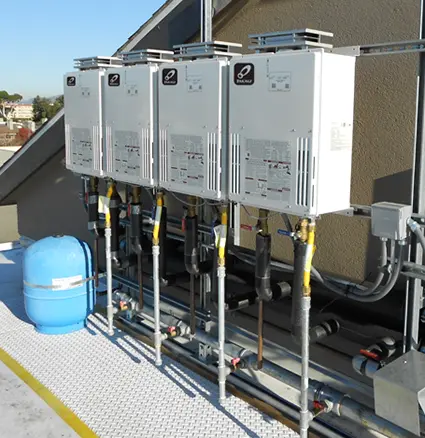
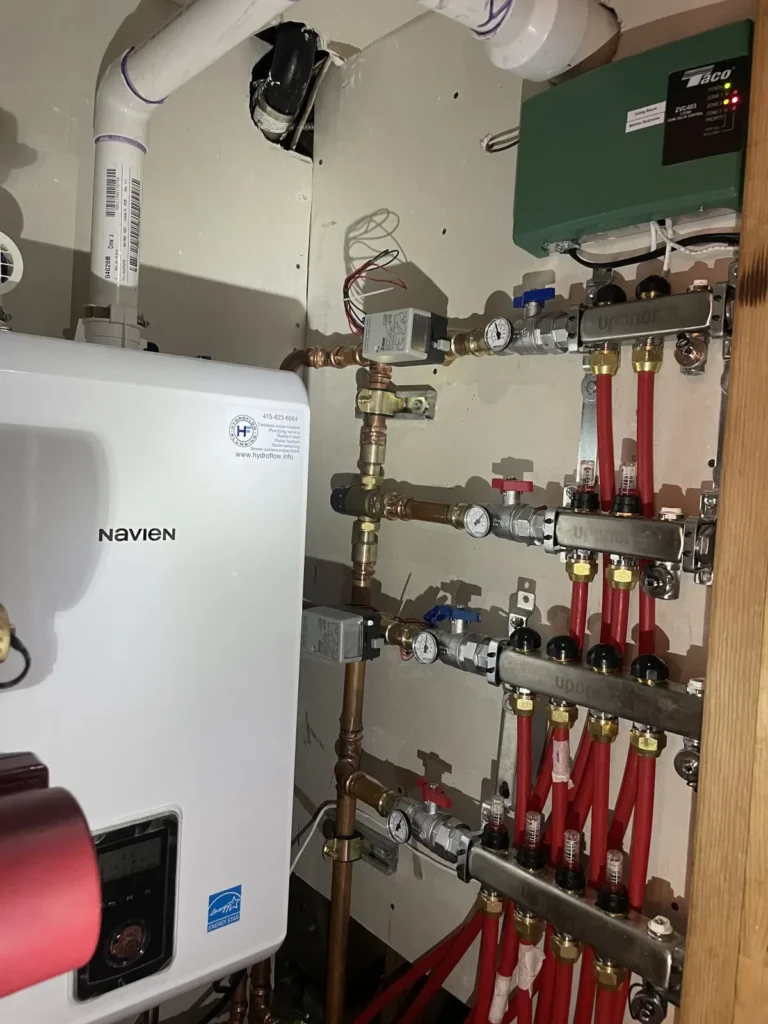
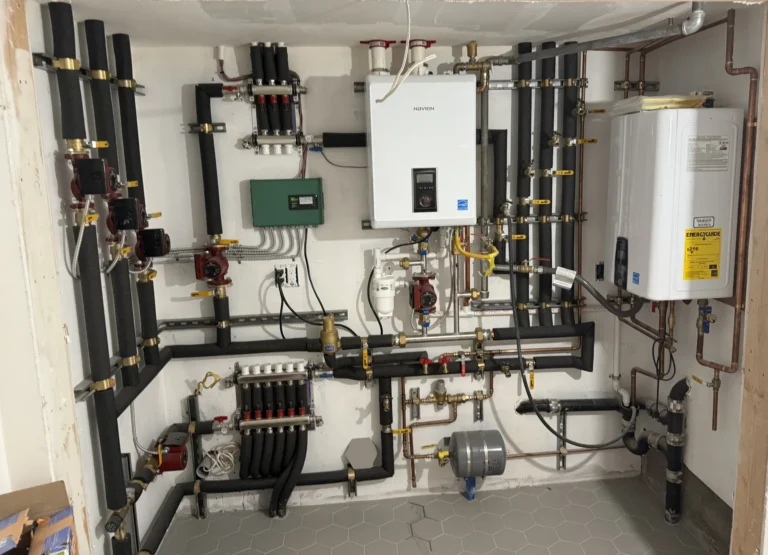
Tankless units make different sounds. A humming or vibrating during use is usually the fan or flow sensor. Normal for Navien and Rinnai units.
If your tankless is making a loud knocking or banging, that's often scale buildup inside the heat exchanger. Tankless water heaters need descaling every 1 to 2 years, especially in areas with harder water. We use a vinegar flush pump to dissolve the scale. Takes about an hour and keeps the unit running at full efficiency.
When to Call a Plumber
Not every noise needs a service call. Here's the quick breakdown:
| Sound | Likely Cause | DIY or Pro? |
|---|---|---|
| Popping or crackling | Sediment | Pro flush recommended |
| Rumbling | Heavy sediment | Pro. May need replacement |
| Whining or screeching | Flow restriction or high pressure | Check valve first, then call pro |
| Ticking or tapping | Thermal expansion | Normal, but check T&P valve |
| Knocking (tankless) | Scale buildup | Pro descaling |
| Sizzling | Water dripping on burner | Pro. Possible leak |
If you're hearing something that doesn't match this list, or if the sound started suddenly and keeps getting louder, don't wait. A water heater that's failing can cause significant water damage. Catching it early almost always saves money.
What Homeowners Ask Us
Is a noisy water heater dangerous?
Usually, no. Popping and ticking are common and not immediately dangerous. A water heater that's been rumbling for months with no maintenance is under more stress than it should be, though, and that can lead to premature failure and leaks.
How often should a water heater be flushed?
We recommend flushing tank water heaters every 1 to 2 years. For homes in areas with harder water, annually is better. For tankless units, descaling every 12 to 18 months keeps the heat exchanger clean.
Can I flush my water heater myself?
You can, but there are risks. If sediment has hardened at the bottom, opening the drain valve can clog it. We've seen homeowners crack drain valves or flood their garage. If your tank hasn't been flushed in 3+ years, we recommend having a professional handle it.
How long do water heaters last?
Tank water heaters typically last 8 to 12 years. Tankless units from brands like Rinnai and Navien can last 15 to 20 years with proper maintenance. The anode rod is the component that usually determines tank lifespan. Once it's gone, the tank starts corroding from the inside.
Weird noise coming from your water heater? Don't ignore it. (415) 623-6564