Hot Water Recirculation: How It Works and Costs
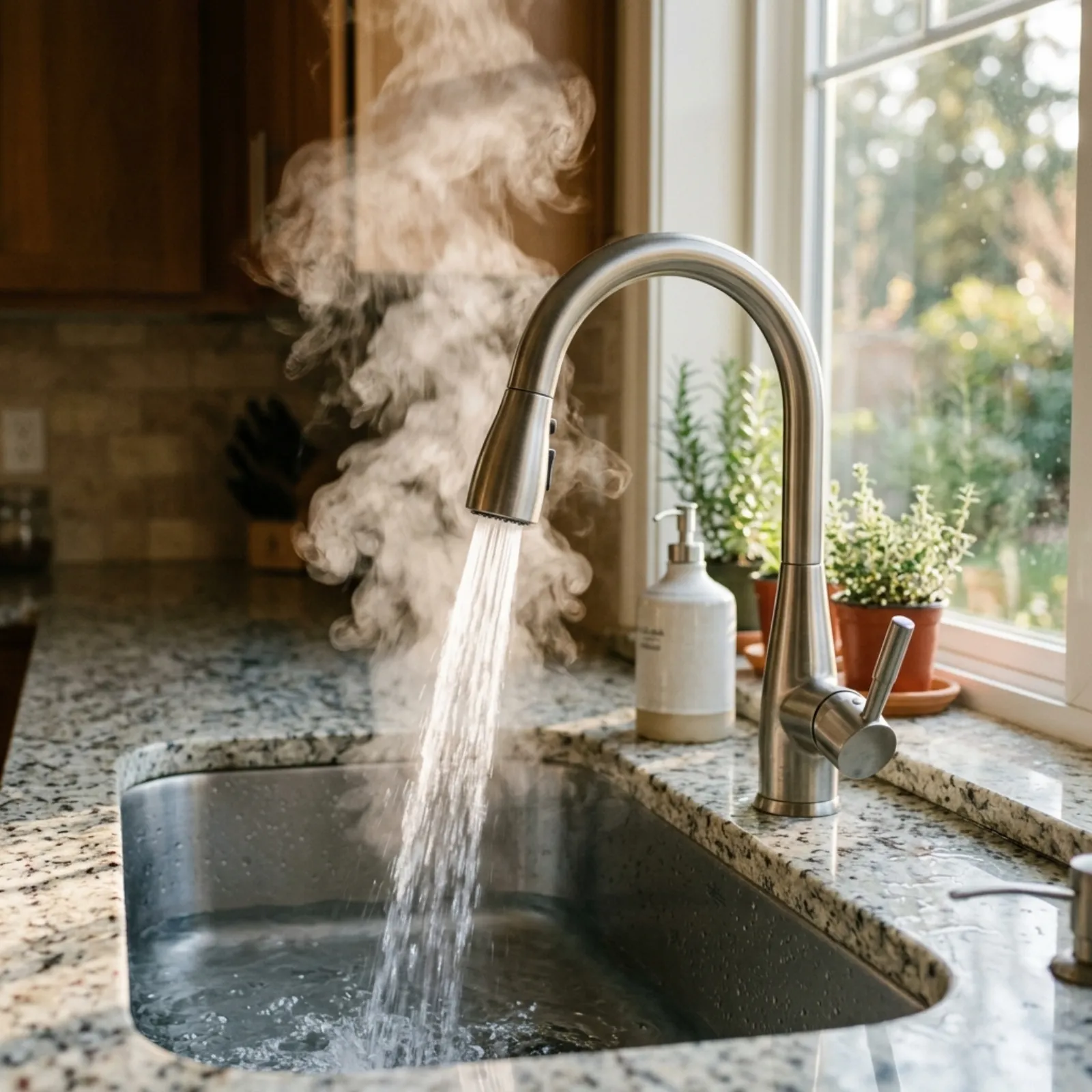
You turn on the shower. You wait. And wait. Two minutes later, hot water finally arrives. That cold water that ran down the drain while you waited? In a typical San Francisco home, that's 2 to 3 gallons wasted per use. Over a year, it adds up to thousands of gallons.
A hot water recirculation system keeps hot water close to your fixtures so it arrives in seconds. Here's how the three types compare.
Why You Wait for Hot Water
The reason is simple. When you turn off a hot water faucet, the water sitting in the pipe between your water heater and that faucet cools down. The next time you turn it on, all that cooled water has to drain out before fresh hot water reaches you.
The farther the fixture is from the water heater, the longer the wait. In a home where the water heater is in the garage and the master bath is on the opposite end, the wait can hit 2 to 3 minutes.
Three Types of Recirculation Systems
Dedicated Return Line
This is the gold standard. A separate pipe runs from the farthest fixture back to the water heater, creating a loop. A small pump circulates hot water through this loop continuously or on a timer, so hot water is always sitting close to every fixture.
Cost: $2,500 to $5,000 installed (includes running the return line)
Best for: New construction or major remodels where you can run new piping through walls. Running a return line in a finished home means opening walls, which adds cost.
Crossover Valve (Comfort Valve)
If running a return line isn't practical, a crossover valve uses your cold water line as the return path. A small pump pushes cooled water from the hot line back through the cold line and into the water heater.
Cost: $800 to $1,500 installed
Best for: Existing homes where running new pipe isn't feasible. The tradeoff: your cold water runs slightly warm for the first few seconds after you turn it on, until the cooled water clears.
Built-in Tankless Recirculation
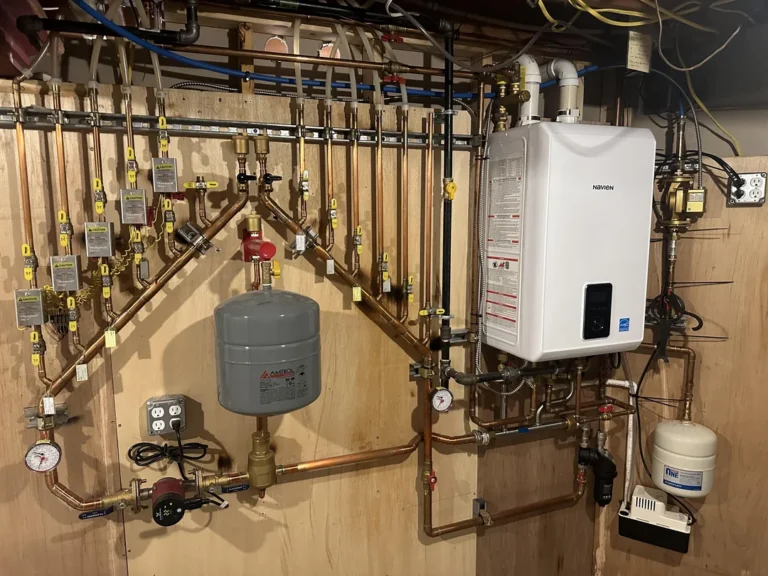
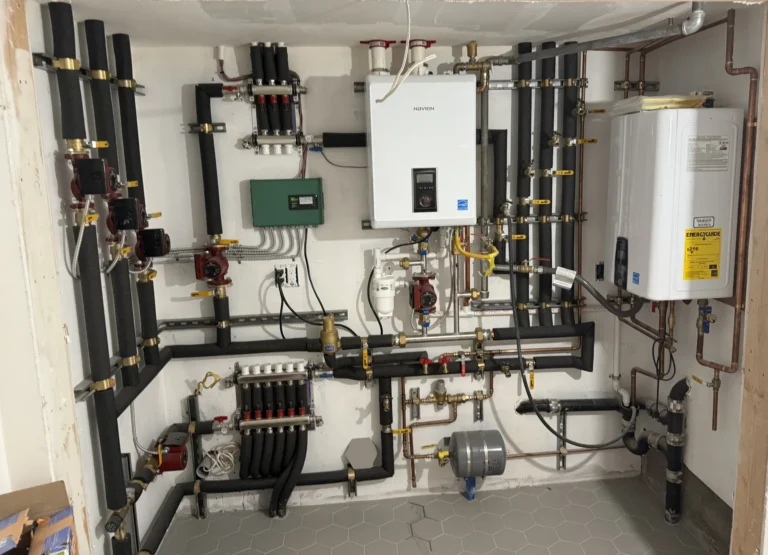
Some tankless water heaters have recirculation built in. Navien's NPE series includes Smart-Circ technology, which learns your usage patterns and circulates hot water before you need it. Rinnai offers similar functionality with their Circ-Logic system.
Cost: No additional cost (included with the unit). If pairing with a crossover valve, add $300 to $500 for the valve.
Best for: Homeowners who are already choosing a tankless system. Navien's built-in recirc is one of the main reasons we install so many of their units.
Cost Comparison
| System | Equipment | Installation | Total |
|---|---|---|---|
| Dedicated return line | $500 to $800 | $2,000 to $4,200 | $2,500 to $5,000 |
| Crossover valve | $200 to $300 | $600 to $1,200 | $800 to $1,500 |
| Built-in tankless recirc | Included with unit | — | Part of tankless install |
The dedicated return line costs more upfront but delivers the best results. No warm cold water, no compromise. For existing homes, the crossover valve is the practical choice.
What We Recommend
For most Bay Area homes, the answer depends on what water heater you have:
Already have a tank water heater? A crossover valve with a timer gives you near-instant hot water for under $1,500. It's the best value upgrade for existing homes.
Installing a new tankless? Go with a Navien NPE with built-in Smart-Circ. You get endless hot water and fast delivery in one unit. If your farthest fixture is more than 50 feet from the unit, pair it with a crossover valve.
Building new or doing a major remodel? Run a dedicated return line. It's the cleanest solution and you'll never think about hot water delivery again.
For homes in the Sunset and the Richmond, where water heaters are typically in the garage and the bathroom is upstairs or on the opposite side of the house, recirculation makes the biggest difference. If you're getting a new water heater installed in San Francisco, ask us about adding recirc at the same time.
What People Want to Know
Does recirculation waste energy?
A pump draws 25 to 100 watts. On a timer, that's roughly $20 to $60 a year in energy. The water savings from not running the tap while waiting usually offset that.
Can I add recirculation to my existing water heater?
Yes. A crossover valve works with any tank or tankless water heater. It installs at the farthest fixture and connects to your existing plumbing. No new piping through walls.
Will a crossover valve make my cold water warm?
Slightly, for the first few seconds after you turn it on. Once the cooled water clears the line, it runs cold as normal. Most homeowners don't notice it. If it bothers you, a dedicated return line eliminates the issue entirely.
Tired of running the tap for two minutes every morning? We install recirculation systems — standalone and built-in. (415) 623-6564