Building an ADU? Add Radiant Heating Now
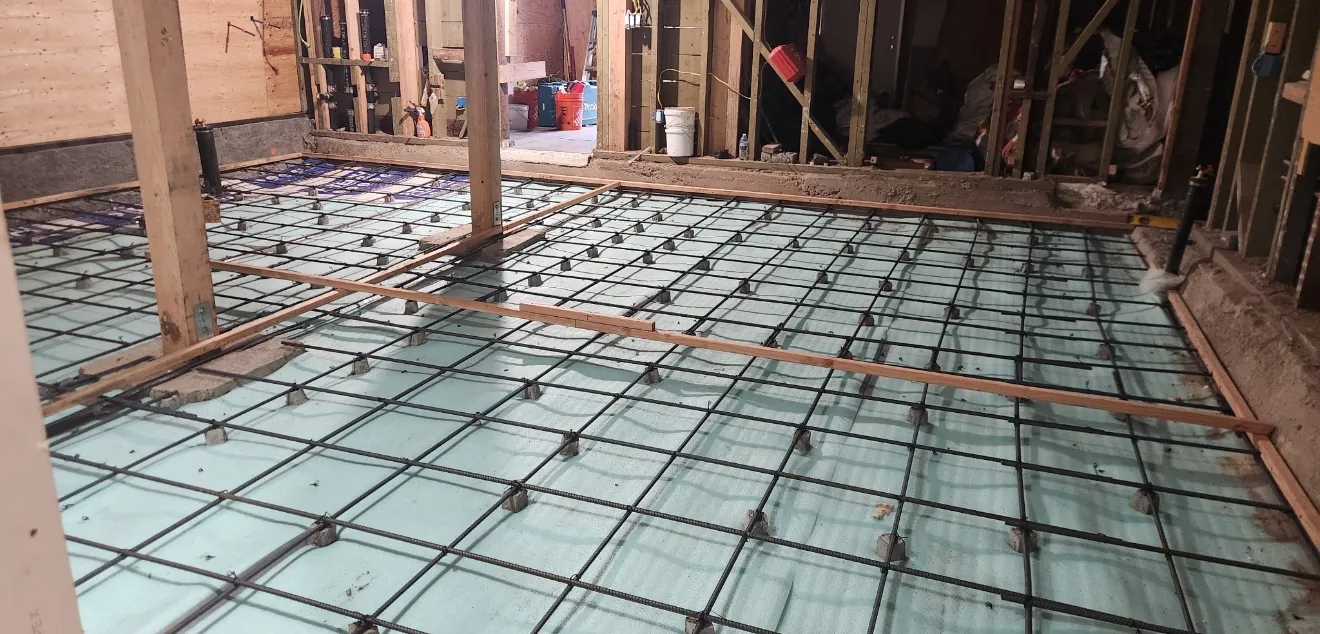
Table of Contents
If you’re building an ADU in San Francisco, there’s a good chance your foundation is getting dug out. That exposed rebar and open subfloor create a narrow window to add radiant floor heating at a fraction of what it would cost in a finished home.
Once the concrete is poured and the floors are down, that window closes. Here’s why it matters.
Why ADU Projects Are Ideal for Radiant
Radiant heating isn’t something you do on a whim. It requires exposed foundation or subfloor to install the tubing. In a finished home, that means tearing out floors, which gets expensive fast.
An ADU buildout gives you both for free. You already have the foundation exposed on the lower level. In most SF ADU projects, the ceiling above is being demoed too, so you have access to the underside of the subfloor. Adding PEX tubing to the rebar before the pour is a small incremental cost on top of the work you’re already doing.
The alternative? Come back later and pay $15,000 to $25,000 more for the same result. Or settle for a heating system you don’t love.
The Three Heating Options for Your ADU
Radiant Floor Heating
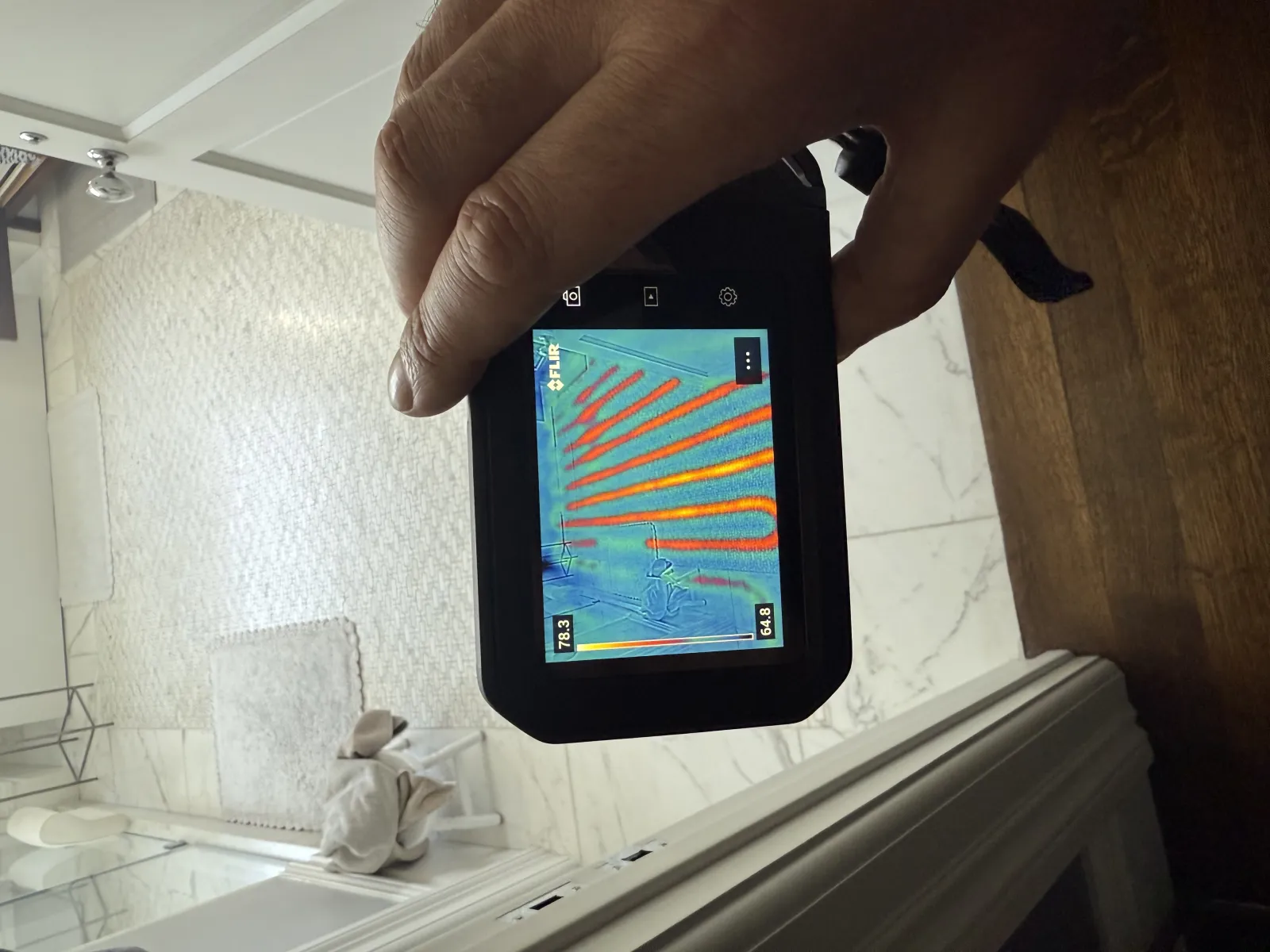
The tubing goes into the foundation or under the subfloor, connected to a boiler. Heat rises from the floor and creates comfortable, even warmth at about five feet. No vents, no ducts, no visible equipment in the room. Physics allows it to be the most comfortable type of heating.
For anyone with asthma or respiratory issues, radiant is the clear winner. No air being forced around the room, no particles being circulated.
Forced Air
Forced air requires ductwork, which means building soffits to hide the ducts. In an ADU where every square foot counts, soffits drop your ceiling height and eat into the space. The comfort is also worse. Forced air pushes heat into a room and makes it circulate, which can feel drafty.
Mini-Split Heat Pump (Cassettes)
Mini-splits handle both heating and cooling from a wall-mounted cassette. The benefit is versatility. The downside is aesthetics. Those wall-mounted units aren’t attractive. And in most SF ADUs, cooling isn’t necessary. The unit is at the lower level of the house where it stays naturally cool.
If you don’t need cooling, radiant gives you better comfort without the visual compromise.
What It Costs During an ADU Build
| Component | Cost |
|---|---|
| PEX tubing in slab | $4 to $8 per sq ft |
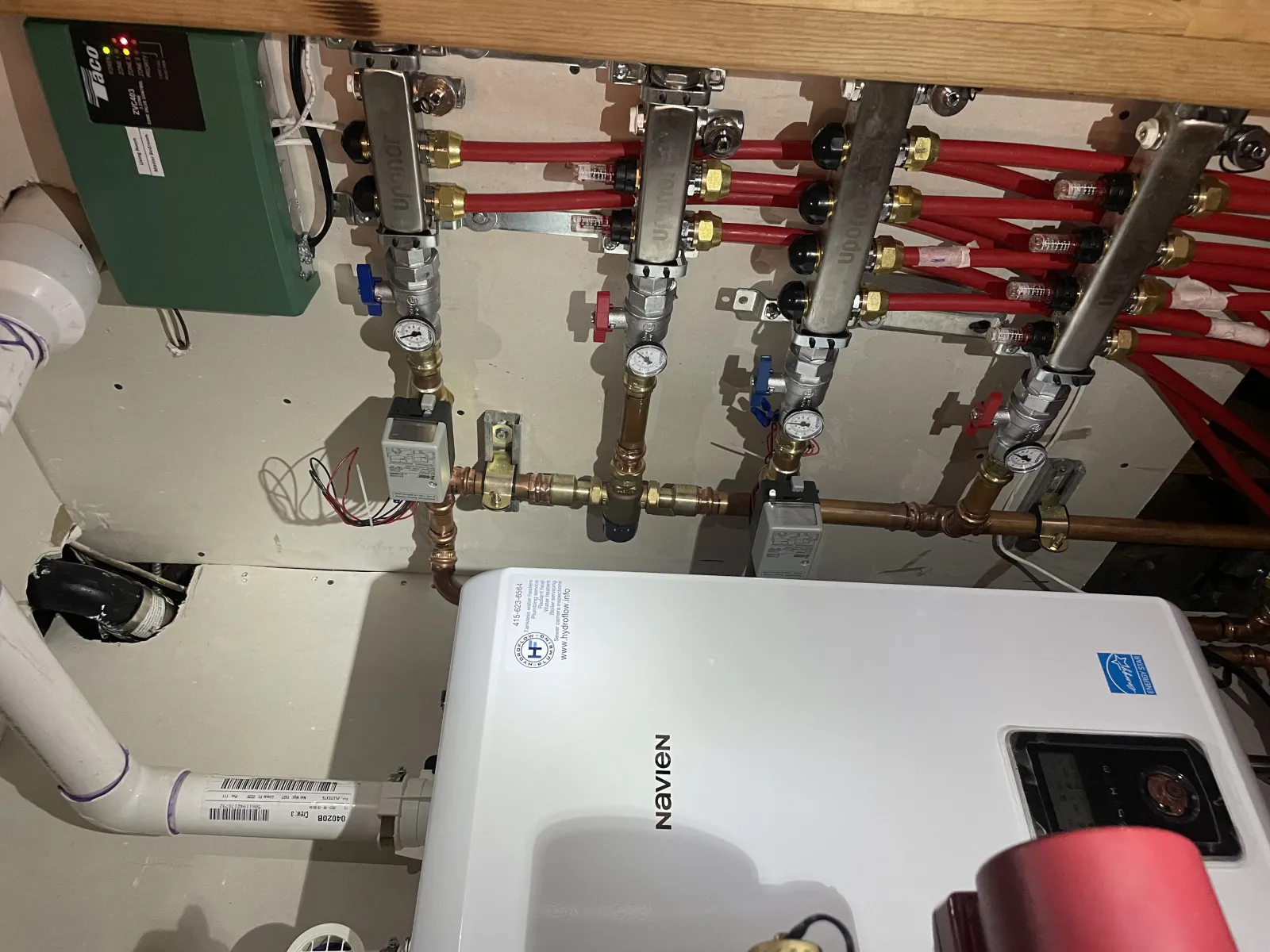
| Manifold and controls | $800 to $1,500 |
| Condensing boiler | $5,000 to $10,000 installed |
| Total for 500 sq ft ADU | $9,000 to $16,000 |
Compare that to retrofitting radiant into a finished space: $16 to $25 per square foot, plus the cost of removing and replacing the flooring.
For a full breakdown of radiant heating costs in different scenarios, see our radiant floor heating cost guide.
SF ADU Permitting and Radiant
San Francisco made ADU permitting much easier over the last few years to address housing demand. Most ADU projects fall into two categories:
Full ADU (basement or garage conversion with foundation work). These are the ones where radiant makes the most sense. The foundation is already being dug out, so adding tubing to the rebar before the pour is straightforward.
Junior ADU (carved out of existing living space, under 500 sq ft). These don’t always involve foundation work. If you’re adding a new bathroom and opening up the floor, radiant may still be feasible. If it’s a light remodel, a mini-split is probably the practical choice.
ADU Radiant Questions
Do I need a separate boiler for the ADU?
It depends. If your main house already has a boiler with enough capacity, we can extend the system to serve the ADU. Otherwise, a small wall-hung condensing boiler dedicated to the ADU is the cleanest option. We size the system during the design phase.
Can I add radiant to just the bathroom?
Yes, and it’s common. Even if you go with forced air or mini-splits for the main living space, radiant in the bathroom floor is a popular upgrade. The cost is modest since the area is small.
What about radiant cooling?
Hydronic radiant cooling exists but isn’t common in residential applications. It requires careful humidity control to prevent condensation. For Bay Area ADUs, it’s not worth the complexity. If you need cooling, pair radiant heating with a mini-split.
Building an ADU? We work with contractors across SF and Marin to get radiant installed right the first time. Let’s talk →
HydroFlow
San Francisco's trusted experts in plumbing, radiant heating, and boiler services. Serving the Bay Area since 2005.