Radiant Floor Heating: Cost and Honest Pros/Cons
Radiant floor heating is the most comfortable type of heating you can get. The heat sits in the floor and rises naturally. At about five feet, right at eye level, the temperature is perfect. That's not marketing. That's physics.
We install hydronic (water-based) radiant heating across San Francisco and Marin County. Here's what it actually costs, where it works best, and where it doesn't.
How Hydronic Radiant Heating Works
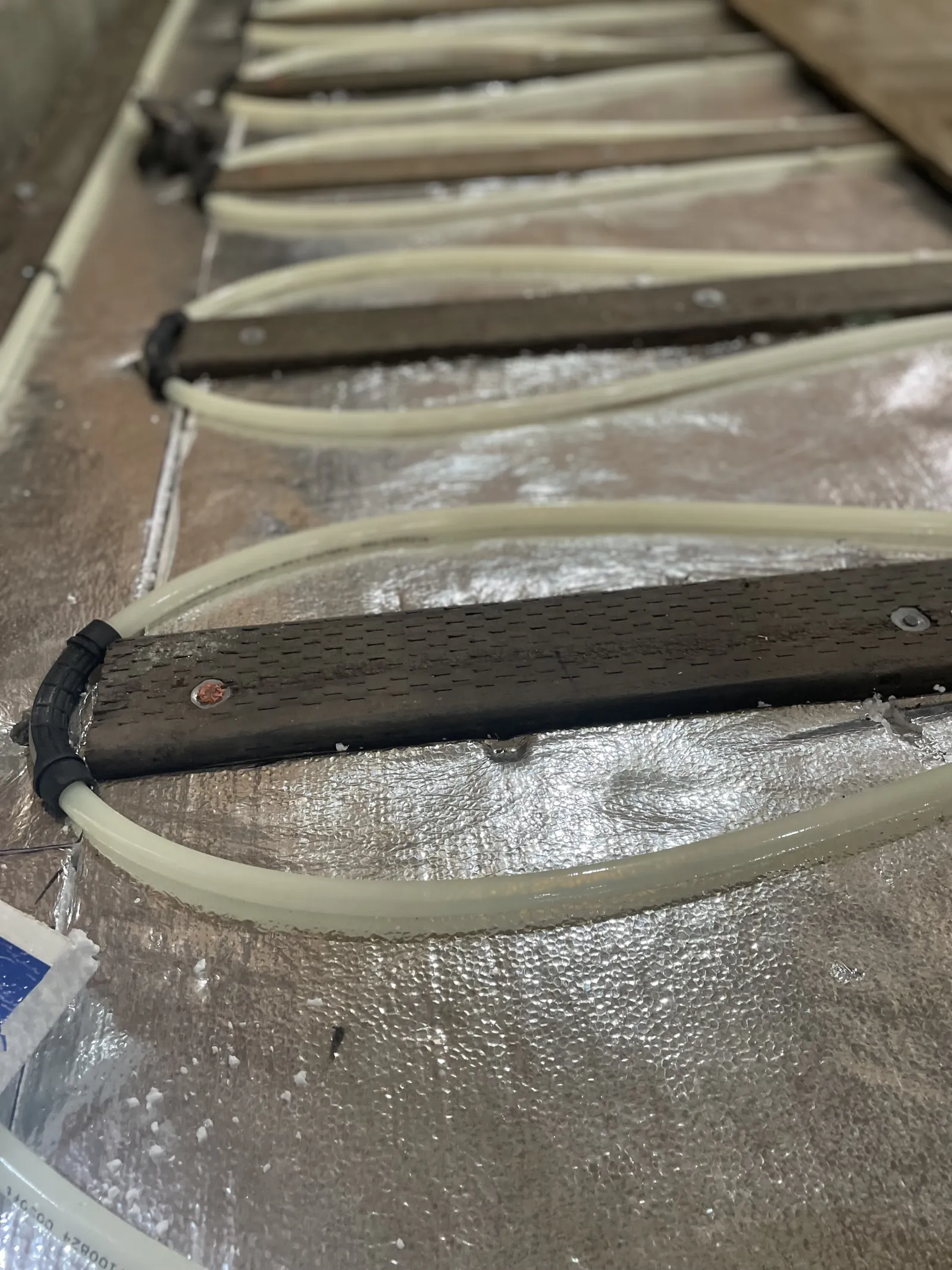
A boiler heats water to around 100 to 140°F and circulates it through PEX tubing embedded in or under the floor. The warm water radiates heat upward through the floor surface, warming the room from the ground up.
There's no ductwork, no vents, no blowing air. The heat is invisible and silent. And because radiant doesn't circulate air, it's better for anyone with asthma or allergies.
What Does Radiant Floor Heating Cost?
Cost depends heavily on whether you're building new or retrofitting an existing home.
| Scenario | Cost Per Sq Ft | Total for 1,500 Sq Ft |
|---|---|---|
| New construction (tubing in slab) | $12 to $18 | $18,000 to $27,000 |
| Retrofit (tubing under subfloor) | $16 to $25 | $24,000 to $37,500 |
| Boiler (condensing) | Included above or $5,000 to $10,000 separately | — |
These figures include the tubing, manifolds, controls, and a condensing boiler. Retrofit costs are higher because accessing the underside of the subfloor usually means working from below (crawlspace or basement) or removing the existing floor.
When Radiant Heating Makes Sense
New construction and major remodels. If the foundation or subfloor is already exposed, adding radiant tubing is straightforward. The incremental cost over forced air is modest when you're already doing the demo work.
ADU projects. Most ADU projects in San Francisco require foundation buildouts, which means the rebar is already exposed. That's the perfect time to add radiant tubing. You've got the foundation open on the lower level and often the ceiling above is demoed too.
Eichler homes. Eichlers were the original push for underfloor heating. They're gorgeous houses with open floor plans and no ductwork. If you own an Eichler with a working radiant system, proper maintenance keeps it running for decades. If the system has been neglected, we can often restore it with a full flush and inhibitor treatment.
Homes where forced air isn't practical. Older San Francisco homes, especially in the Sunset and the Richmond, often lack the space for ductwork. Running ducts means building soffits, which drops ceilings and eats into already-tight rooms. Radiant avoids all of that.
When It Doesn't
Quick, budget-conscious projects. If you need heat and you need it fast, a forced air system or mini-split is cheaper and faster to install.
Homes that need cooling too. Radiant handles heating only. If you also need air conditioning, you'll still need a separate cooling system (mini-splits are the most common pairing). Forced air or a heat pump with cassettes can do both heating and cooling from one system.
Minor remodels. Adding radiant heat to a room with an intact floor means tearing out the floor or accessing from below. The cost often doesn't justify it for a single room unless you're already renovating.
Which Boilers Pair Best with Radiant?
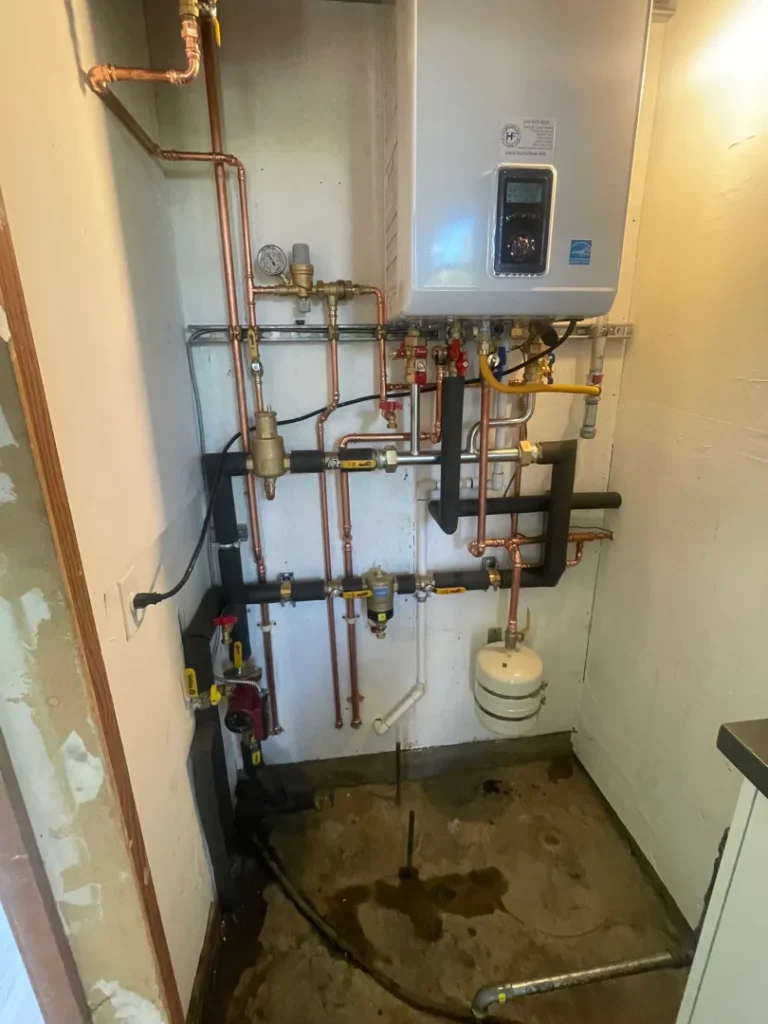
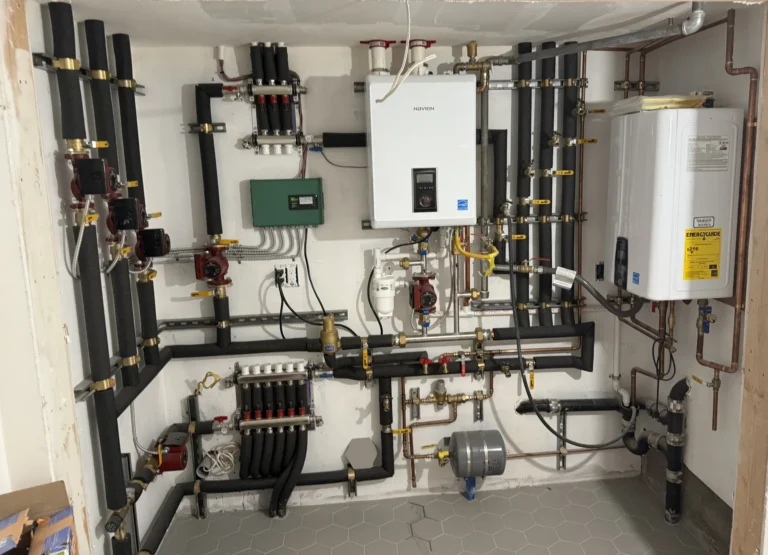
Radiant heating works best with a modulating condensing boiler that can adjust its output precisely. The water temperature for radiant runs lower than domestic hot water (100 to 140°F vs 120 to 140°F), so the boiler needs to modulate down efficiently.
| Brand | Why We Use It for Radiant |
|---|---|
| Lochinvar | Commercial-grade reliability, excellent modulation range |
| Viessmann | German engineering, whisper-quiet operation |
| NTI | Compact wall-hung units, great for tight spaces |
| Navien | Affordable, solid combi option for smaller systems |
For a full breakdown on boiler options and pricing, see our boiler replacement cost guide.
Radiant Heating Maintenance
Radiant systems are low-maintenance compared to forced air, but they're not zero-maintenance.
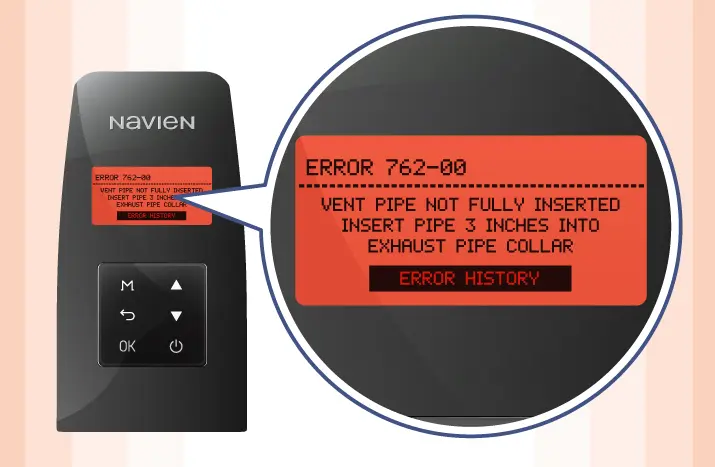
Annual boiler service is the most important piece. If the boiler isn't serviced, it's not heating efficiently. See our boiler error codes guide for what to watch for.
System water treatment. The water circulating through the radiant loops should be treated with an inhibitor to prevent corrosion and scale. This is especially important in Marin County where the water is harder.
Pressure checks. A radiant system should hold steady pressure. Dropping pressure usually means a small leak somewhere in the loop. Catching it early prevents damage to floors and subfloor.
Radiant Heat vs Forced Air
| Radiant | Forced Air | |
|---|---|---|
| Comfort | Even heat, no drafts | Uneven, can feel drafty |
| Air quality | No air circulation | Circulates dust and particles |
| Noise | Silent | Fan noise, duct popping |
| Cooling | Heating only | Can do both |
| Install cost | Higher | Lower |
| Visibility | Invisible (under floor) | Vents, ducts, soffits |
| Maintenance | Annual boiler service | Filter changes, duct cleaning |
Questions We Get Asked
Can I add radiant heating to an existing home?
Yes, but it's a bigger project. We install tubing under the subfloor from below (through a crawlspace or basement) or in a new pour-over slab. It's most cost-effective when you're already doing a remodel that exposes the floor structure.
Does radiant floor heating work with all flooring types?
It works best with tile, stone, and polished concrete. These materials conduct heat well. Hardwood works but transfers heat more slowly. Thick carpet with heavy padding acts as insulation and reduces effectiveness.
How long does a radiant heating system last?
The PEX tubing is rated for 50+ years. The boiler typically lasts 15 to 25 years with proper maintenance. The tubing usually outlasts multiple boilers.
Thinking about radiant? We design and install hydronic systems across San Francisco and Marin. Get a quote →