Boiler Replacement Cost (2026): What to Expect
A boiler replacement isn't cheap, and the pricing is all over the map. We've seen quotes range from $5,000 to $12,000 for what sounds like the same job — the difference usually comes down to the type of system, what needs to change in the venting, and whether your gas line can handle it.
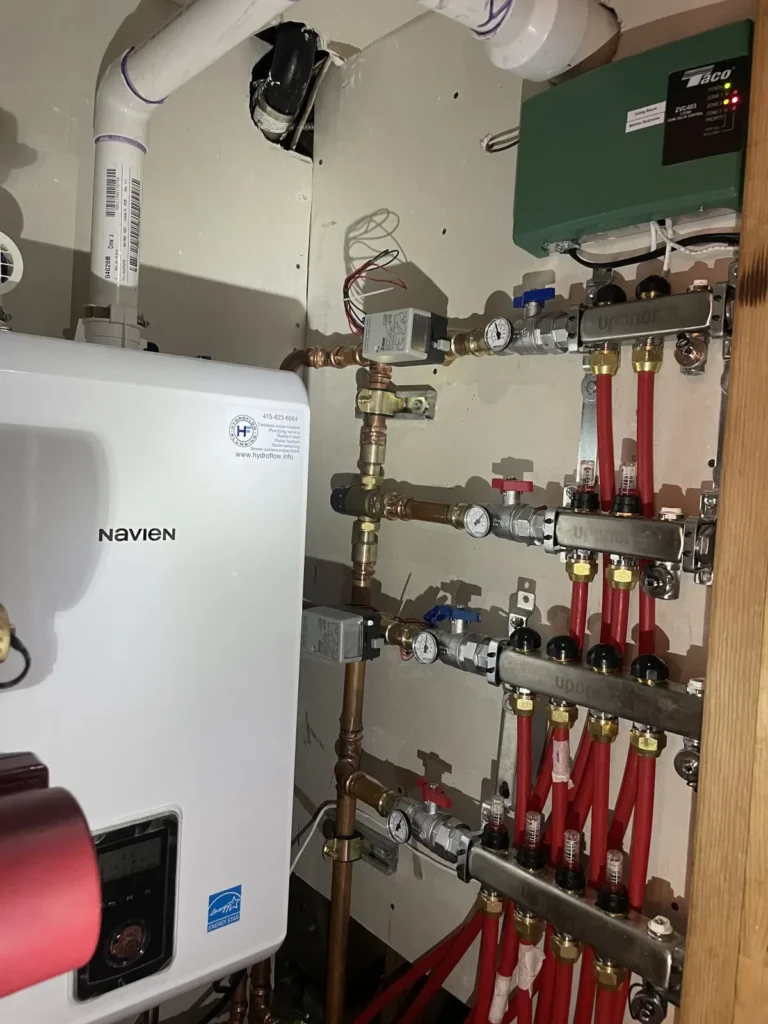
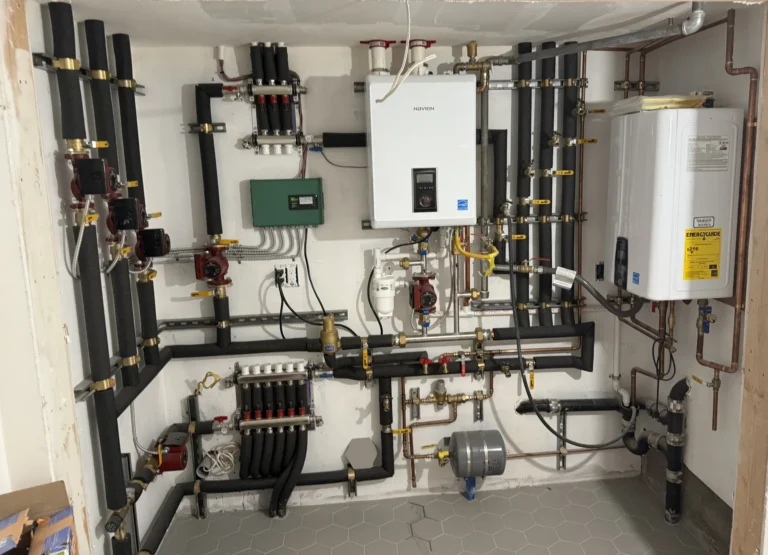
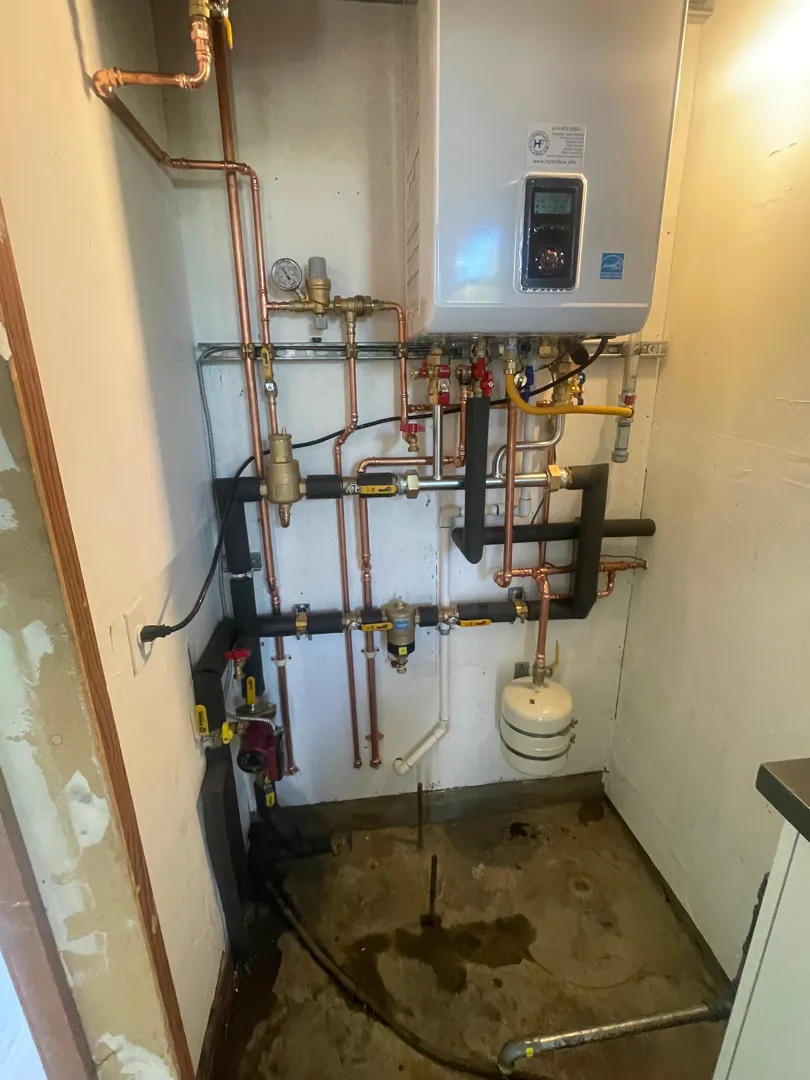
We swap out boilers across San Francisco and Marin County every week — a lot of them feeding radiant floor heating. Here's what actually drives the cost.
How Much Does a Boiler Replacement Cost?
For a residential boiler replacement in the Bay Area, here's what we typically see:
| System Type | Unit Cost | Installation | Total Installed |
|---|---|---|---|
| Non-condensing (standard) | $2,000 to $4,000 | $2,000 to $3,500 | $4,000 to $7,500 |
| Condensing (high-efficiency) | $3,500 to $6,500 | $2,500 to $4,500 | $6,000 to $11,000 |
| Combi boiler | $3,000 to $5,500 | $2,500 to $4,000 | $5,500 to $9,500 |
These ranges reflect Bay Area labor and permitting costs. The final price depends on brand, install complexity, and whether your venting or gas lines need upgrading.
Condensing vs Non-Condensing: What's the Difference?
A non-condensing boiler runs at about 80 to 85% efficiency and vents exhaust through a metal flue up through the roof. Still common in plenty of San Francisco homes — nothing wrong with them, they just use more gas.
A condensing boiler runs at 95 to 97% efficiency. It extracts extra heat from the exhaust gases before they vent out, which means it can use PVC piping through a side wall instead of a traditional chimney. That's a big advantage in homes where running a new metal flue would be expensive or impractical.
The efficiency numbers look great on paper. In reality, the monthly gas savings are modest — you're looking at 7 to 10 years to recoup the price difference on efficiency alone. Where condensing really wins is venting flexibility (PVC through a side wall instead of running new metal flue) and the fact that modern units just last longer.
Combi Boilers: Two Jobs, One Unit
A combi (combination) boiler handles both your domestic hot water and your radiant heating from a single unit. No separate water heater needed.
This makes them ideal for homes where space is tight. In neighborhoods like the Sunset and the Richmond, where utility closets are small, a combi boiler frees up square footage that a separate water heater and boiler would take.
The tradeoff: a combi boiler prioritizes hot water over heating. When someone turns on a shower, the boiler temporarily stops heating the radiant loop to focus on hot water production. In most homes this isn't noticeable. In larger homes with high simultaneous demand, a system boiler with a separate indirect tank may be the better choice.
Which Brands Do We Install?
We work with all the major boiler manufacturers. Here's how they compare:
| Brand | Strengths | Best For |
|---|---|---|
| Navien | Affordable, reliable, strong combi lineup | Budget-friendly condensing |
| Lochinvar | Commercial-grade build quality | High-demand homes, multifamily |
| Viessmann | German engineering, quiet operation | Premium residential |
| NTI | Compact, efficient | Space-constrained installs |
| Bosch | Solid mid-range, widely available parts | Straightforward replacements |
| Triangle Tube | Stainless steel heat exchangers | Hard water areas like Marin (note: check recall status) |
| Baxi | European design, modulating | Radiant-focused systems |
| HTP | Compact wall-hung, good support | Small to mid-size homes |
We don't have a house brand. What we recommend depends on your heating load, water hardness, available space, and what you want to spend.
When Should You Replace Your Boiler?
Not every old boiler needs replacing. But there are clear signs that repair stops making sense:
Age. Most boilers last 15 to 25 years. If yours is past 20 and needing frequent repairs, replacement is usually more cost-effective.
Repair frequency. One repair a year is normal for an older boiler. Two or three repairs in a single season means the system is failing. If your boiler keeps throwing error codes, that's often a sign the sensors and components are wearing out faster than they can be serviced.
Rising energy bills. If your gas bills have climbed steadily without a change in usage, the boiler's efficiency has likely degraded. Older non-condensing units can drop to 70% efficiency or lower.
Uneven heating. Rooms that used to heat evenly but now have cold spots often point to a boiler that can't maintain consistent output. This is especially common in homes with radiant floor heating where the boiler needs to maintain precise water temperatures.
Parts availability. Some older boilers from discontinued brands have parts that are hard to source. When a repair requires a 3-week wait for a part, it's time to consider a new unit.
Maintenance That Extends Your Boiler's Life
Annual maintenance isn't optional for modern condensing boilers. These are precision machines with sensors, condensate traps, and modulating gas valves that need regular attention.
Our annual boiler service includes:
- Combustion analysis (checking gas-to-air ratio)
- Heat exchanger inspection and cleaning
- Condensate drain flush
- Pressure and expansion vessel check
- Safety controls testing
- System water quality test
In Marin County especially, water hardness causes scale buildup in the heat exchanger faster than in San Francisco. We recommend water treatment (inhibitor and a dirt magnetic separator) for Marin boiler installations to prevent premature heat exchanger failure.
For homes with Eichler radiant systems, boiler maintenance is even more critical. Those in-slab copper loops are irreplaceable, and the boiler needs to protect them with the right water chemistry and temperature control. We wrote a full guide on why new boilers can damage Eichler systems if they're not installed with the right protocol.
Common Questions We Get
How long does the job take?
A straight swap — same type, same location — is usually one to two days. Going from non-condensing to condensing adds time because the venting changes completely. Figure two to three days for those.
Is a condensing boiler worth the extra cost?
For most Bay Area homes, yes. The venting flexibility alone (PVC through a side wall vs. running a new metal flue) can save $1,000 to $2,000 on installation. The efficiency savings are a bonus on top of that.
Can a boiler replace my water heater?
Yes. A combi boiler handles both heating and domestic hot water. We install them regularly in San Francisco homes where eliminating the separate water heater frees up space.
Do you offer financing?
Yes. We offer financing options on boiler replacements. Contact us for current rates and terms.