Boiler vs. Water Heater: Which Is Right for You?
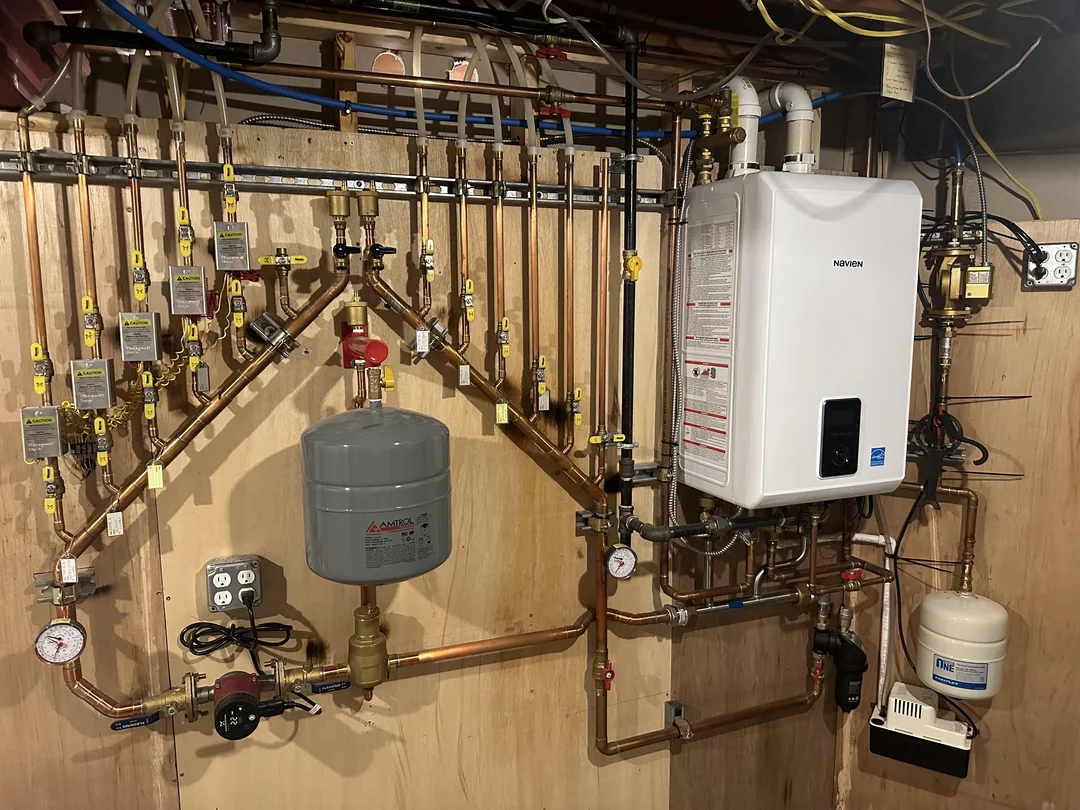
Table of Contents
When it comes to keeping your showers hot and your home comfortable, not all heating systems are created equal. If you are upgrading your home’s mechanical room or replacing a failing unit, you’ve probably heard terms like “tankless,” “heat pump,” and “boiler” thrown around.
But what exactly is the difference? And more importantly, which one is right for your home?
At HydroFlow, we install and maintain all of them across San Francisco and Marin. Here is our breakdown of the four main types of water heating systems so you can make the smartest investment for your family.
1. The Standard Storage Water Heater (The Classic)
This is the system most people grew up with. A standard water heater stores anywhere from 40 to 50 gallons of water in a large tank and keeps it heated to your desired temperature (usually around 120 degrees).
- How it works: It uses slow-burning gas combustion. When the temperature inside the tank drops, a thermostat triggers the burner to fire up and reheat the stored water.
- The Pros: They are affordable, reliable, and straightforward to replace (usually taking only half a day for a like-for-like swap).
- The Cons: They are only about 80% to 85% energy efficient because you are constantly paying to keep 50 gallons of water hot, even when you aren’t home. They also take up a significant amount of closet or garage space.
2. Tankless Water Heaters (The Space Saver)
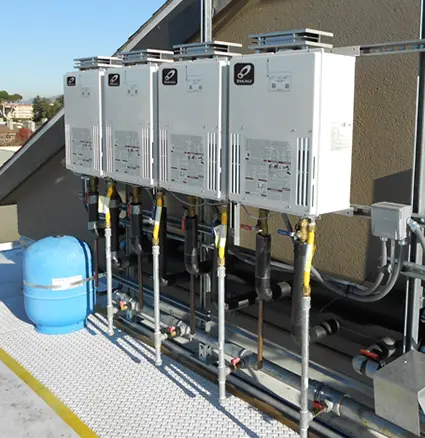
Tankless water heaters—often called “on-demand” water heaters—do exactly what their name implies: they eliminate the storage tank.
- How it works: When you turn on a hot water faucet, cold water flows through the unit, and a high-combustion gas burner instantly heats the water as it passes through. They can produce 5 to 7 gallons of hot water per minute on demand.
- The Pros: They are about 95% efficient because you are only heating water exactly when you need it. Because they don’t have a massive tank, they can be mounted on a wall, making them perfect for homes in San Francisco where space is a premium.
- The Cons: Upgrading from a standard tank to a tankless unit requires a more complex installation (often requiring gas line upgrades or new flue piping) which can take one to two days.
3. Heat Pump Water Heaters (The Green Option)
If you want to move away from gas entirely, heat pump water heaters are the future. California is heavily incentivizing these systems to reduce emissions, especially with the upcoming 2027 Bay Area Gas Water Heater Phase-Out.
- How it works: Instead of burning fuel to create heat, they use electricity and refrigeration technology—think of it as a refrigerator working in reverse. They pull ambient heat from the air in the room, compress it, and transfer it into a storage tank.
- The Pros: They are staggeringly efficient—up to 400% more efficient than a standard electric water heater. They also qualify for massive state rebates and federal tax credits.
- The Cons: Heat pumps have a much slower recovery rate (about 27 gallons an hour) compared to gas tanks. Because they can’t produce hot water instantly, they require massive storage tanks—often twice the size of a standard gas tank. They also need plenty of open airflow (like a garage) and a dedicated 240V electrical circuit, which may require an electrical panel upgrade.
4. Boilers (The Heavyweight Champion)
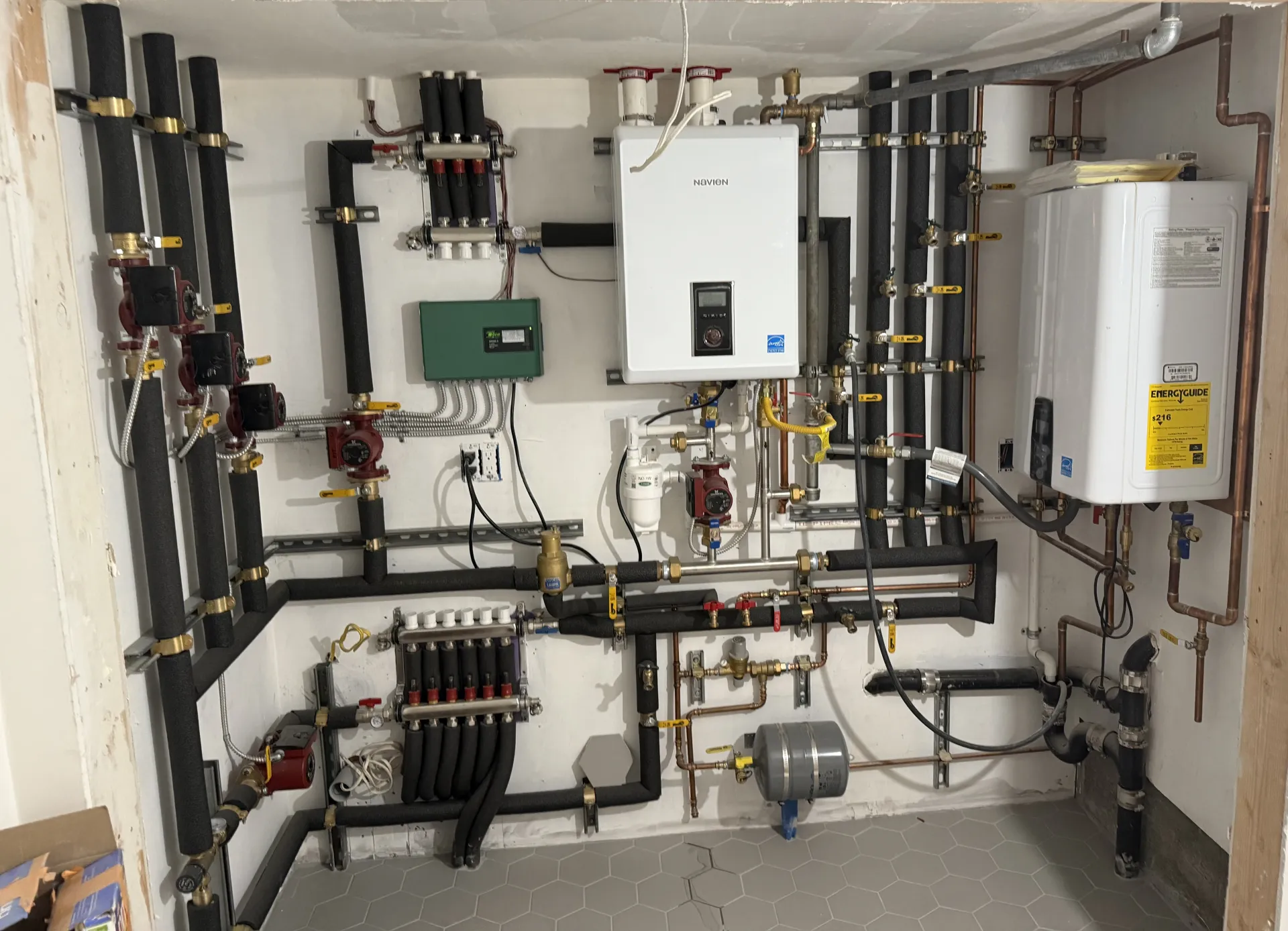
A boiler is essentially a much smarter, incredibly powerful version of a water heater.
- How it works: While standard water heaters have two modes (on or off), a boiler can “modulate.” This means it can heat water at 10%, 20%, or 80% capacity depending on exactly what your home needs at that moment.
- The Pros: Boilers have a massive burning capacity and recovery rate. They are perfect for high-demand scenarios like multi-family buildings or large homes where multiple people might shower at the same time. The biggest advantage? A single “Combi-Boiler” can simultaneously provide endless domestic hot water for your showers and heat the water running through your home’s radiant underfloor heating system.
- The Cons: Boilers are the most expensive and complex systems to install. Modern high-efficiency boilers (which run at 95%–97% efficiency) are essentially highly calibrated computers. Just like a modern car, they are packed with sensitive sensors requiring strict annual maintenance—especially in Marin where the water is harder—to prevent breakdown.
Which System is Right For You?
There is no one-size-fits-all answer. Your choice will depend on three major factors:
- Your space: Do you have room for a massive heat pump, or do you need a compact tankless wall unit?
- Your demand: Does your family run out of hot water every morning? Are you timing your laundry around your showers?
- Your home’s infrastructure: Do you have radiant underfloor heating? Does your electrical panel have the capacity for a 240V circuit?
Don’t guess. Let the experts at HydroFlow evaluate your home and guide you to the perfect system. We specialize in everything from high-efficiency Combi-Boilers to standard tank replacements.
Contact HydroFlow today to schedule a consultation and never take a cold shower again!
HydroFlow
San Francisco's trusted experts in plumbing, radiant heating, and boiler services. Serving the Bay Area since 2005.